STARTED & FINISHED:
Krosoczka, Jarrett J. (2018). Hey, Kiddo. New York: Graphix/Scholastic.
[.]
*
Showing posts with label parents. Show all posts
Wednesday, November 14, 2018
Labels:
addiction,
alcoholism,
autobiography,
awards,
boy,
comics,
coming of age,
drugs,
Eric favorite,
family,
grandparents,
graphic novels,
historical,
parents,
YA
Friday, November 9, 2018
FINISHED:
Albert, Melissa. (2018). The Hazel Wood. New York: Flatiron/Macmillan.
[.]
STARTED:
Adeyemi, Tomi. (2018). Children of Blood and Bone. New York: Henry Holt & Co./Macmillan.
[Another title (like the one above...) that we're reading for our SFPL Mock Printz next month.]
*
Albert, Melissa. (2018). The Hazel Wood. New York: Flatiron/Macmillan.
[.]
STARTED:
Adeyemi, Tomi. (2018). Children of Blood and Bone. New York: Henry Holt & Co./Macmillan.
[Another title (like the one above...) that we're reading for our SFPL Mock Printz next month.]
*
Labels:
alternate reality,
books,
existentialism,
fairy tales,
girl,
parents,
science fiction,
storytelling,
YA
Saturday, May 26, 2018
FINISHED:
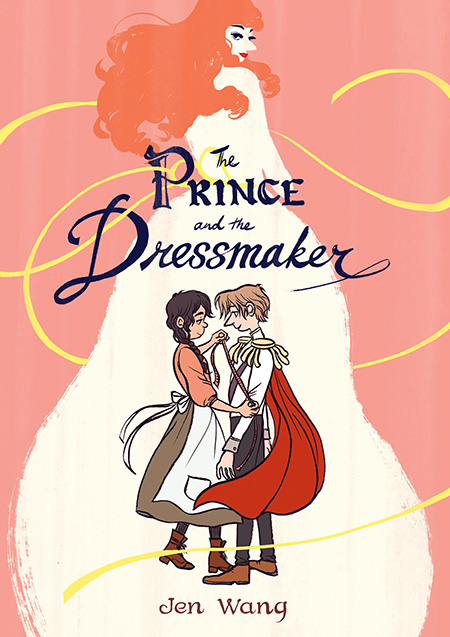
Wang, Jen. (2018). The Prince and the Dressmaker. New York: First Second/Roaring Brook.
[I LOVED THIS.]
STARTED:
????
Catching up on audiobooks, at the moment...
[.]
*
Wang, Jen. (2018). The Prince and the Dressmaker. New York: First Second/Roaring Brook.
[I LOVED THIS.]
STARTED:
????
Catching up on audiobooks, at the moment...
[.]
*
Labels:
Eric favorite,
family,
fashion,
gender non-conformity,
gender roles,
graphic novels,
historical,
parents,
prince,
romance
Wednesday, February 7, 2018
FINISHED:
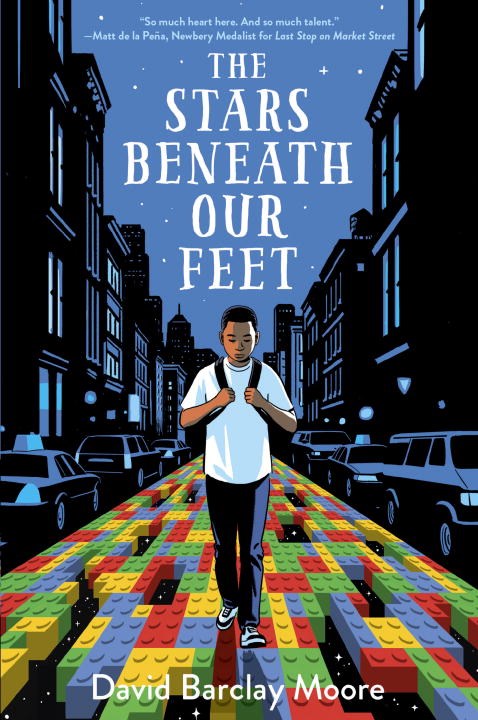
Moore, David Barclay. (2017). The Stars Beneath Our Feet. New York: Knopf.
[.]
STARTED:
Burkey, Mary. (2013). Audiobooks for Youth: a Practical Guide to Sound Literature. Chicago: ALA Editions.
[Gearing up for the ALSC Notable Children's Recordings committee.]
*
Moore, David Barclay. (2017). The Stars Beneath Our Feet. New York: Knopf.
[.]
STARTED:
Burkey, Mary. (2013). Audiobooks for Youth: a Practical Guide to Sound Literature. Chicago: ALA Editions.
[Gearing up for the ALSC Notable Children's Recordings committee.]
*
Labels:
architecture,
art,
autism,
boy,
brothers,
coming of age,
death,
ethics,
family,
friendship,
gangs,
grief,
homosexuality,
multicultural,
New York,
parents,
revenge
Friday, January 26, 2018
FINISHED:
Gemeinhart, Dan. (2018). Good Dog. New York: Scholastic.
[.]
STARTED:
Cuevas, Michelle. (2017). The Care and Feeding of a Pet Black Hole. New York: Dial/Penguin Random House.
[.]
*
Gemeinhart, Dan. (2018). Good Dog. New York: Scholastic.
[.]
STARTED:
Cuevas, Michelle. (2017). The Care and Feeding of a Pet Black Hole. New York: Dial/Penguin Random House.
[.]
*
Labels:
abuse,
alcoholism,
animals,
boy,
death,
foster system,
ghosts,
parents,
villain
Wednesday, January 3, 2018
FINISHED:
Schlitz, Laura Amy. (2017). Princess Cora and the Crocodile. Somerville, MA: Candlewick.
[.]
STARTED:
Eagar, Lindsay. (2017). Race to the Bottom of the Sea. Somerville, MA: Candlewick.
[.]
*
Schlitz, Laura Amy. (2017). Princess Cora and the Crocodile. Somerville, MA: Candlewick.
[.]
STARTED:
Eagar, Lindsay. (2017). Race to the Bottom of the Sea. Somerville, MA: Candlewick.
[.]
*
Labels:
animals,
fairy tales,
family,
girl,
humor,
parents,
princess,
short stories,
wishes,
younger readers
Tuesday, December 5, 2017
FINISHED:
Ness, Patrick. (2017). Release. New York: HarperCollins.
[.]
STARTED:
Williams-Garcia, Rita. (2017). Clayton Byrd Goes Underground. New York: Amistad/HarperCollins.
[Getting some Newbery buzz...]
*
Ness, Patrick. (2017). Release. New York: HarperCollins.
[.]
STARTED:
Williams-Garcia, Rita. (2017). Clayton Byrd Goes Underground. New York: Amistad/HarperCollins.
[Getting some Newbery buzz...]
*
Labels:
boy,
character study,
communication,
crime,
death,
family,
homophobia,
homosexuality,
magical realism,
moving,
multicultural,
murder,
parents,
religion,
romance,
YA
Saturday, December 2, 2017
FINISHED:
Meloy, Colin. (2017). The Whiz Mob and the Grenadine Kid. New York: Balzer + Bray/HarperCollins.
[In Marseille, France, 1961, Charlie Fisher, the neglected twelve year old son of an American Consul General, falls in with a Lebanese boy named Amir and a crew of other young, multicultural pickpockets. Looking to forge a life of his own, as well as find some friends, Charlie is brought into the fold first by running center field (watching and learning) and then as a duke man (the one that all of the other pickpockets bring their spoils to), all while trying to keep the two diametrically opposed sides of his life from colliding. Meticulously crafted and thoroughly researched, vivid descriptions rife with specific detail bring the streets of the French city to life, and an occasional authorial direct address adds further humor to an already amusing tale. Just when you begin to wonder where it’s all going, a doozy of a bombshell is dropped two thirds of the way through which excitingly lays the groundwork for the final path ahead, while Carson Ellis’s occasional full page illustrations feel period to the ‘60s, often recalling the rounded figures of Peter Max and Daniel Pinkwater. Meloy continually brings up socio-economics as the ragtag band of misfits see themselves as Robin Hoods to a certain degree, with Amir saying, “Way I see it, we’re evening the score a bit, yeah?... To take the rich folks down a peg”, and the Code of the Whiz Mob being that “no one facing financial hardship, marginalization, or oppression of any sort should be targeted.” When Charlie’s hard-honed skills are put to a final test near the end, we get a true, step by step insight into the art of the steal, and luckily, included at the end is an extensive (and quite necessary!) glossary of whiz lingo.]
STARTED:
Ness, Patrick. (2017). Release. New York: HarperCollins.
[.]
*
Meloy, Colin. (2017). The Whiz Mob and the Grenadine Kid. New York: Balzer + Bray/HarperCollins.
[In Marseille, France, 1961, Charlie Fisher, the neglected twelve year old son of an American Consul General, falls in with a Lebanese boy named Amir and a crew of other young, multicultural pickpockets. Looking to forge a life of his own, as well as find some friends, Charlie is brought into the fold first by running center field (watching and learning) and then as a duke man (the one that all of the other pickpockets bring their spoils to), all while trying to keep the two diametrically opposed sides of his life from colliding. Meticulously crafted and thoroughly researched, vivid descriptions rife with specific detail bring the streets of the French city to life, and an occasional authorial direct address adds further humor to an already amusing tale. Just when you begin to wonder where it’s all going, a doozy of a bombshell is dropped two thirds of the way through which excitingly lays the groundwork for the final path ahead, while Carson Ellis’s occasional full page illustrations feel period to the ‘60s, often recalling the rounded figures of Peter Max and Daniel Pinkwater. Meloy continually brings up socio-economics as the ragtag band of misfits see themselves as Robin Hoods to a certain degree, with Amir saying, “Way I see it, we’re evening the score a bit, yeah?... To take the rich folks down a peg”, and the Code of the Whiz Mob being that “no one facing financial hardship, marginalization, or oppression of any sort should be targeted.” When Charlie’s hard-honed skills are put to a final test near the end, we get a true, step by step insight into the art of the steal, and luckily, included at the end is an extensive (and quite necessary!) glossary of whiz lingo.]
STARTED:
Ness, Patrick. (2017). Release. New York: HarperCollins.
[.]
*
Labels:
boy,
crime,
Eric favorite,
ethics,
family,
friendship,
gangs,
historical,
multicultural,
parents,
theft
Sunday, November 19, 2017
Saturday, November 4, 2017
FINISHED:
Bell, Eric. (2017). Alan Cole is Not a Coward. New York: Katherine Tegen/HarperCollins.
[.]
STARTED:
Bartók, Mira. (2017). The Wonderling. Somerville, MA: Candlewick.
[.]
*
Bell, Eric. (2017). Alan Cole is Not a Coward. New York: Katherine Tegen/HarperCollins.
[.]
STARTED:
Bartók, Mira. (2017). The Wonderling. Somerville, MA: Candlewick.
[.]
*
Labels:
abuse,
anger,
boy,
brothers,
competition,
family,
friendship,
homosexuality,
parents,
rivalry
Tuesday, October 3, 2017
FINISHED:
O'Reilly, Jane. (2017). The Notations of Cooper Cameron. Minneapolis, MN: Carolrhoda/Lerner.
[Cooper Cameron (no indication of race is conveyed) just finished 5th grade, and is spending the summer with his mother and older sister at a house on the lake where his grandfather died 2 years earlier – an incident for which Cooper feels responsible, and which seems to have triggered in him some obsessive compulsive disorder (OCD) ticks. With a verbally abusive father out of the way for most of the summer, Cooper, who frequently jots down life lessons in a notebook, learns how to make ice cream for an elderly neighbor and is hired by a nice kid in town to tie fishing lures, which help to keep “That Boy” – his name for the OCD side of himself who causes him to do things in groups of three – at bay. The awful behavior of his father and the things that he says about Cooper are palpably biting, and there’s a poignancy to Cooper’s continually trying to ward off “That Boy” when he begins to feel his OCD being triggered by a stressful situation. Though a subplot involving a series of thefts in town feels hyped and then unsatisfyingly resolved, and there seem to be lapses in time throughout the novel, Cooper’s realization that not everything is his fault and sometimes there is nothing he can do to help is a powerfully learned message.]
STARTED:
Lee, Mackenzi. (2017). The Gentleman's Guide to Vice and Virtue. New York: Katherine Tegen/HarperCollins.
[.]
*
O'Reilly, Jane. (2017). The Notations of Cooper Cameron. Minneapolis, MN: Carolrhoda/Lerner.
[Cooper Cameron (no indication of race is conveyed) just finished 5th grade, and is spending the summer with his mother and older sister at a house on the lake where his grandfather died 2 years earlier – an incident for which Cooper feels responsible, and which seems to have triggered in him some obsessive compulsive disorder (OCD) ticks. With a verbally abusive father out of the way for most of the summer, Cooper, who frequently jots down life lessons in a notebook, learns how to make ice cream for an elderly neighbor and is hired by a nice kid in town to tie fishing lures, which help to keep “That Boy” – his name for the OCD side of himself who causes him to do things in groups of three – at bay. The awful behavior of his father and the things that he says about Cooper are palpably biting, and there’s a poignancy to Cooper’s continually trying to ward off “That Boy” when he begins to feel his OCD being triggered by a stressful situation. Though a subplot involving a series of thefts in town feels hyped and then unsatisfyingly resolved, and there seem to be lapses in time throughout the novel, Cooper’s realization that not everything is his fault and sometimes there is nothing he can do to help is a powerfully learned message.]
STARTED:
Lee, Mackenzi. (2017). The Gentleman's Guide to Vice and Virtue. New York: Katherine Tegen/HarperCollins.
[.]
*
Monday, September 11, 2017
FINISHED:
Alexander, Kwame. (2017). Solo. New York: Blink/HarperCollins.
[.]
STARTED:
van Gulden, Holly, and Bartles-Rabb, Lisa M. (1993). Real Parents, Real Children: Parenting the Adopted Child. New York: Crossroad.
[.]
*
Alexander, Kwame. (2017). Solo. New York: Blink/HarperCollins.
[.]
STARTED:
van Gulden, Holly, and Bartles-Rabb, Lisa M. (1993). Real Parents, Real Children: Parenting the Adopted Child. New York: Crossroad.
[.]
*
Labels:
adoption,
alcoholism,
anger,
boy,
coming of age,
drugs,
family,
multicultural,
music,
novel in verse,
parents,
pop culture,
travel,
verse,
YA
Friday, September 8, 2017
FINISHED:
Pérez, Celia C. (2017). The First Rule of Punk. New York: Viking/Penguin Random House.
STARTED:
Alexander, Kwame. (2017). Solo. New York: Blink/HarperCollins.
[.]
*
Pérez, Celia C. (2017). The First Rule of Punk. New York: Viking/Penguin Random House.
[Twelve year old, Mexican American, zine-creating MarÃa Luisa
– who goes by Malú – must move from Florida to Chicago for two years when her
mom gets a temporary job there, sad that she must leave behind her father (her
parents are divorced) and his music store.
Always having felt more of a connection to her father’s punk music
influence than her mother’s Mexican heritage, Malú feels a bit out of touch
with the primarily Latinx neighborhood and school in which she now finds
herself, but when the makeshift band that Malú forms with some schoolmates
doesn’t get chosen to be in the school talent show because the school wants it
to reflect tradition, Malú and the Cocos (the band’s name) decide to have their
own Alterna-Fiesta Talent Show and play a punked-up version of the Mexican
classic “Cielito Lindo”. The singularly-focused
and uncluttered narrative is briskly paced and thoroughly engaging, featuring
Malú’s likeable voice which often sounds like you are reading excerpts directly
from her journal. By the end, Malú has
learned the value of her heritage by interacting with her new neighbors and
classmates, and is able to integrate both sides/identities of her parents when
she begins to connect with her Mexican heritage through its music. Reproductions
of Malu’s multi-page zines provide interludes between select chapters, and serve
to provide further explanation on topics such as the slur “coconut”, Calaveras,
and dyeing your hair.]
STARTED:
Alexander, Kwame. (2017). Solo. New York: Blink/HarperCollins.
[.]
*
Labels:
conformity,
Eric favorite,
family,
friendship,
girl,
moving,
multicultural,
music,
parents,
school,
zines
Subscribe to:
Posts (Atom)